Technopolitical Blog
Silencing: When a Platform Owner Decides Who Has the Right to Speak
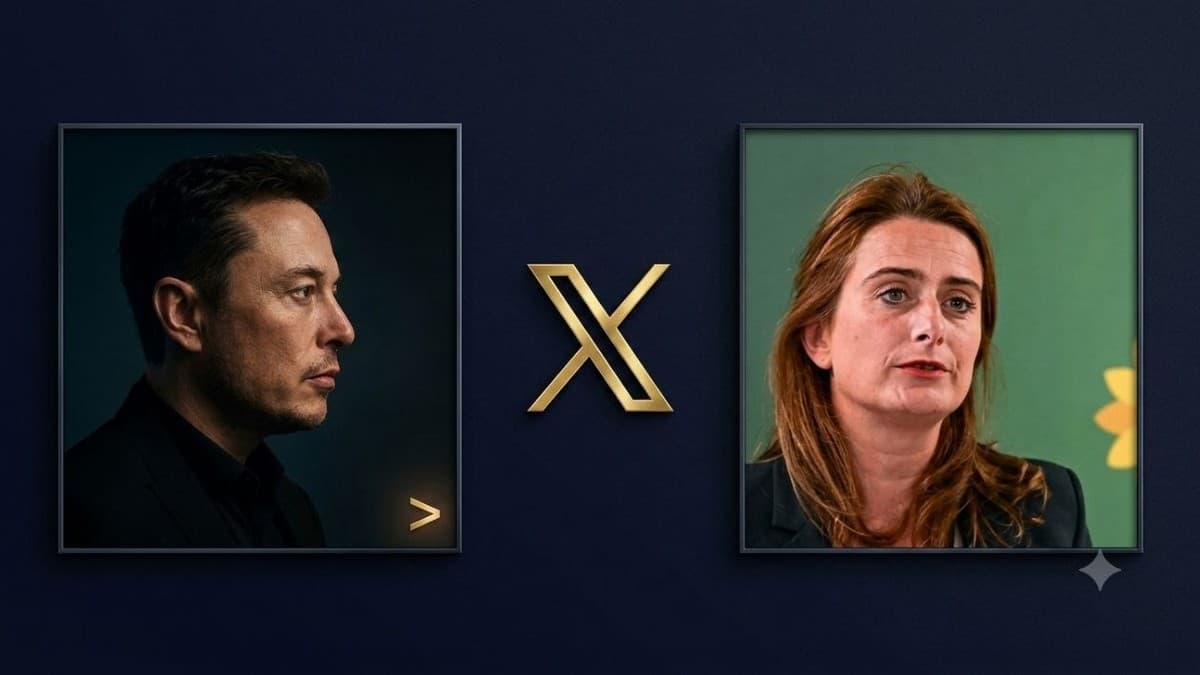
A foreign billionaire demands that a French presidential candidate be "silenced" for "treason." The episode has all the hallmarks of fleeting media noise. And yet it reveals something structural about our democracies: interference no longer comes only from states — it can come from a private platform, owned by one man, located thousands of miles from our borders.
Key takeaways:
- Three declared presidential candidates were targeted by an interference operation attributed to Russia
- Marine Tondelier has proposed banning X in France during the campaign, arguing its algorithm is "rigged"
- Elon Musk responded by demanding she be "silenced" for "treason"
- The exchange illustrates the "Musk System" theorized by Asma Mhalla: Economic Trolling, Total Technology, Technopolitics
1. The Trigger
It all begins with an interference operation. Three declared candidates in the French presidential race — Édouard Philippe, Gabriel Attal, and Raphaël Glucksmann — were targeted by a malicious operation attributed to Russia. In Raphaël Glucksmann's case, it took the form of a fake media outlet set up by a pro-Russian network, targeting him in a disinformation campaign. "We will not allow hostile foreign powers to steal an election as crucial as this one for France's future," he declared. We covered this affair in our previous article on the deepfake targeting him.
It is in this context that Marine Tondelier, leader of the Écologistes and a contender for the Élysée, published an interview in Libération. Her proposal is radical: ban X in France for the duration of the campaign. Her argument rests on two points. First, the platform's algorithm is "rigged": it constitutes "a powerful form of interference in democratic life" and exerts "a structural, daily, minute-by-minute impact on disinformation." Second, the owner himself is the problem: she describes Elon Musk as "a person, based in the United States, with a supremacist ideology who clearly wants to tip Europe into total submission to the United States."
The billionaire's response is swift. Long accustomed to intervening in European political debates in support of nationalist right-wing movements, Elon Musk demands that Marine Tondelier be "silenced" for "treason." The Écologistes leader fires back: "France has no lessons in patriotism to receive from a foreign billionaire who believes he can decide which European political leaders must be silenced. Democracy is not for sale. Not even to the world's richest man." She adds that she would rather "be accused of defending democracy than of trying to buy it."
2. The Concept: Two Forms of Interference, One Question
The notion of interference is ordinarily reserved for states. A foreign intelligence service manipulating public opinion, a power funding political parties, an army spreading narratives: that is classical interference, the kind tracked by institutions like VIGINUM, doing what it can with the resources at its disposal.
The Musk case forces us to broaden the framework. A platform owner is not a state. He has neither army nor borders. But he holds something that states themselves covet: the infrastructure of public debate. This is precisely what Asma Mhalla analyzes in her essays Technopolitique and Cyberpunk : le nouveau système totalitaire: the power of Big Tech is horizontal — it projects itself, it does not coerce — while state power is vertical. The Dileviathan, the two-headed political creature she describes, fuses the two: the Big State (United States, China) and Big Tech (Meta, Alphabet, X-Corp, Palantir, SpaceX).
To understand the particular case of Elon Musk, the researcher proposes a three-pillar framework she calls the "Musk System": Economic Trolling, Total Technology, and Technopolitics. Applied to the Tondelier-Musk sequence, it illuminates every level of the conflict.
3. In Practice: The Exchange Through the Lens of the 3Ts
Economic Trolling. The demand to "silence" a party leader for "treason" is, first and foremost, a spectacular show of force. Elon Musk makes provocation an instrument: each outburst generates hours of commentary, monopolizes the debate, and entrenches the idea that the platform and its owner are inescapable. Trolling is not a side effect of his strategy — it is a modality of his power, straddling the line between economic and political actor.
Total Technology. Behind the anecdote lies the machine. X is not a social network like any other: it has become the arena where a decisive share of French political debate plays out. The algorithm decides what is visible, amplified, suppressed. Moderation decides who can speak, what can be said, what disappears under the shadow-ban. When one man controls this machine, the question of who arbitrates speech ceases to be technical and becomes political. That is the meaning of Marine Tondelier's proposal: faced with a total technology, the democratic reflex is to remove it from the game during an election.
Technopolitics. The third pillar runs deepest. A foreign platform owner who declares which European political leaders must fall silent is acting as a transnational political actor. He conquers no territory; he bears down on the formation of wills. Marine Tondelier's formulation — "democracy is not for sale" — names this shift: sovereignty is no longer played out solely in treaties; it is played out in the architecture of the platforms that condition public speech.
The dilemma is real, and it has no simple solution. Banning X during the campaign means touching freedom of expression and the pluralism of debate. Doing nothing means allowing a total technology, owned by a foreign private actor, to weigh on an election. The #JeQuitteX movement, launched in January 2025 upon Donald Trump's return to the White House, revealed the limits of individual boycott: Green MPs — Sandrine Rousseau, Marie Pochon, Charles Fournier, Damien Girard — joined it, Marine Tondelier herself had not, and the mobilization failed to produce the hoped-for effects. Leaving the platform also means leaving the debate it hosts.
4. What Comes Next?
The episode raises a question that technopolitics makes unavoidable: who arbitrates public debate? Neither prohibition nor resignation answers it. Avenues exist: European regulation (the Digital Services Act), digital sovereignty — alternative infrastructures such as OVHcloud or Mistral, still marginal in market share — and an education in cognitive saturation, that "dictatorship of flows" which exhausts the capacity for critical distance before the question of content even arises.
In Dileviathan, the characters live in a world where the flow has replaced debate, where every citizen has become, in Asma Mhalla's phrase, an unwitting soldier in the cognitive war. The exchange between Marine Tondelier and Elon Musk is not a campaign sideshow. It is a scene from that world, played out at speed before our eyes.
The question is not whether Elon Musk has the right to say what he says. It is why the answer to that question still depends on a private platform.
📚 Sources
- Le Figaro — « Ingérences étrangères : après l'appel de Marine Tondelier à interdire X en France, Elon Musk veut la "réduire au silence" pour "trahison" », 6 August 2026
- Libération — interview with Marine Tondelier (cited in the Le Figaro article), 6 August 2026
- Asma Mhalla — Technopolitique : comment la technologie fait de nous des soldats (Placedeslibraires)
- Asma Mhalla — Cyberpunk : le nouveau système totalitaire (Placedeslibraires)
- Conference — Asma Mhalla presents Cyberpunk at the Mollat bookshop
- Interview — « Vous n'avez rien vu, Trump a déjà changé votre monde », HugoDécrypte × Asma Mhalla
Publié le August 7, 2026 par Christophe Wiest
Articles similaires
Platform regulation: Europe collects, America judges
The week of August 17, 2026 will go down in the annals of digital regulation as the one in which three blows were struck, almost simultaneously, on two continents and under two distinct legal regimes.
29 août 2026
Social Media for Minors: Is the Constitutional Council Opening a Regulatory Dead End?
On August 14, 2026, the Constitutional Council struck down Article 1 of the law banning social media access for minors under 15.
21 août 2026
Big Tech vs. the State: Who Really Governs the Digital World?
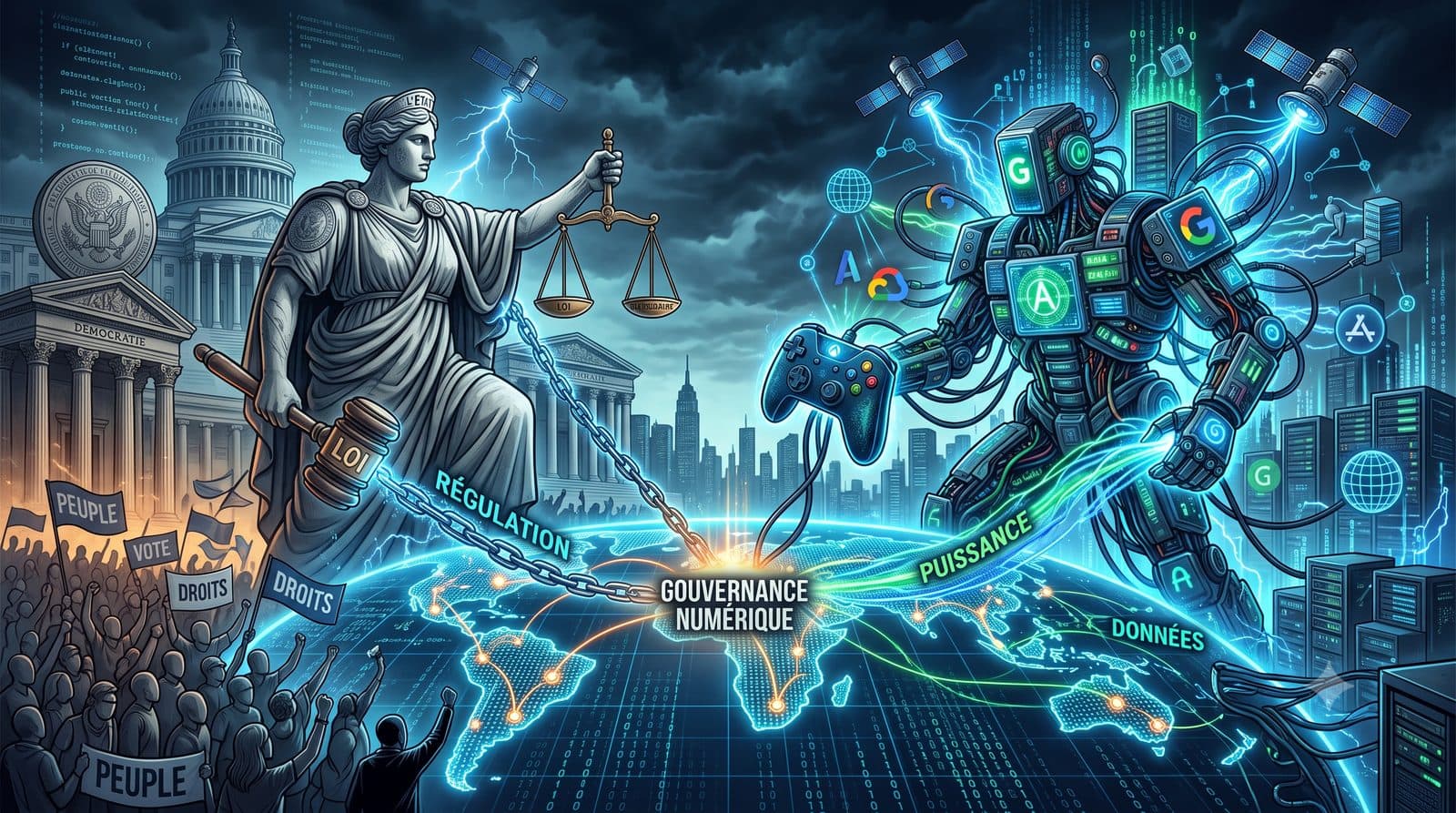
X/Twitter Decides Who Gets to Speak. Google Knows Where You're Going. SpaceX Controls Internet Access in Wartime. Do States Still Have the Final Say?
10 août 2026