Technopolitical Blog
Foreign Interference: A Year Before the Presidential Election, the Cognitive War Has Already Begun
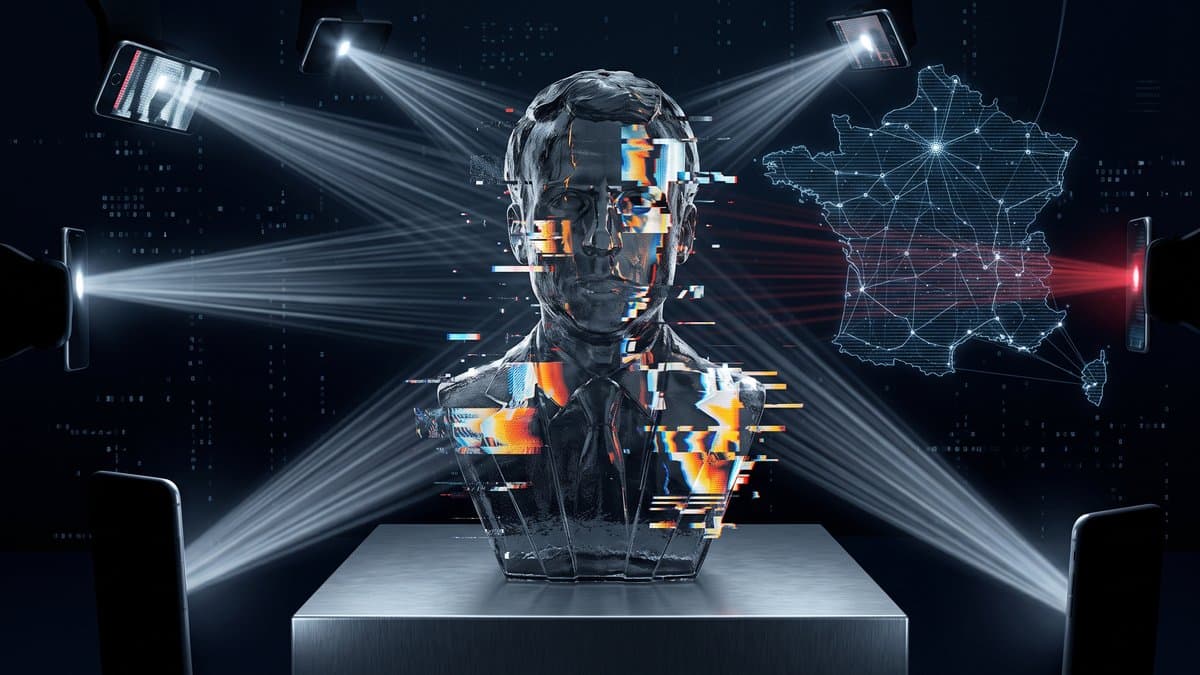
Three candidates targeted in ten days. Édouard Philippe, Raphaël Glucksmann, then Gabriel Attal: in the summer of 2026, foreign digital interference operations entered the presidential campaign with unprecedented intensity. Fake reports, fake front pages of French media outlets, coordinated posts on X, fabricated accusations — networks linked to Russia are at work, according to the authorities. The question is no longer whether the 2027 presidential election will be targeted by these operations, but how France will respond.
Documented Operations
The most emblematic case concerns Raphaël Glucksmann. On August 6th, the Paris prosecutor's office opened an investigation into suspected Russian interference targeting him, following the circulation of a fake news report. The investigation, entrusted to the cybercrime unit, must determine whether the likely social-democratic candidate — a fierce critic of Vladimir Putin — was targeted by the pro-Russian group Storm-1516, run by the GRU.
Gabriel Attal was targeted by a campaign attributed, with a high degree of confidence, to the Matriochka network. The method is well-rehearsed: fake front pages mimicking the graphic codes of several French media outlets, coordinated posts on X, often crude accusations — including one claiming he was showing early signs of Parkinson's disease.
The Continuation of Politics by Other Means
The epigraph to the Sémaphore chapter of Dileviathan quotes Carl von Clausewitz: war is merely the continuation of politics by other means. Digital interference operations are exactly that: the continuation of foreign policy by means that are no longer military, but informational. The novel stages this invisible war from its very opening, in a world where narratives are manufactured and media have become weapons.
Asma Mhalla, in Technopolitique : comment la technologie fait de nous des soldats, gives formal shape to this intuition: cognitive warfare is not won on the military battlefield, but in minds. Technology turns us into soldiers, often without our knowing it, because it transforms our everyday practices into battlegrounds. Our browsing, our sharing, our outrage become the vectors of operations we serve without meaning to.
Why These Operations Work Despite Their Crudeness
The apparent paradox lies in the numbers. Taken in isolation, these fabrications seem clumsy: the team of the Renaissance secretary-general states that the content targeting Gabriel Attal was seen, at most, between 50,000 and 60,000 times.
Their effectiveness, however, does not rest on their credibility, but on their capacity to be picked up by the media. A fake report realistic enough, a fake front page close enough to the codes of a major outlet, and the mechanics of amplification do the rest. The very act of debunking becomes a vector of propagation.
Rayna Stamboliyska, a cyber-threat expert affiliated with the CNRS internet and society centre and founder of the consultancy RS Strategy, urges caution. She distinguishes between influence — comparable to that exercised by pro-Kremlin propagandist Xenia Fedorova — and interference, which consists in covertly shaping public debate. Above all, she warns against the risk of politicians proclaiming themselves victims, thereby diverting attention from the state's responsibility to protect public discourse.
This caution echoes the vigilance of the novel. In Dileviathan, manipulation never comes from a single dramatic twist, but from an accumulation of micro-events whose meaning only becomes apparent in retrospect. The chapter La Diffusion describes a moment in which a truth attempts to carve a path through a space saturated with competing narratives. This is precisely the difficulty of fighting interference: distinguishing the true from the false when both circulate at the same speed.
The Role of Institutions
In the face of these threats, France has Viginum, the service for Vigilance and Protection against Foreign Digital Interference. Created in 2021, it detects, analyses, and documents interference operations. Its work is real; its reports, documented.
But the balance of power is unequal. Russian operators have considerable resources and a rapid capacity for adaptation. Generative AI has lowered the cost of producing realistic content: voice cloning, manipulated images, fake reports. John Hultquist, chief analyst at Google Threat Intelligence, notes that AI makes content more natural, even as the broadening of campaigns increases their digital signature and therefore their detectability.
Viginum does what it can with the means it has. But detection is not enough: it requires the cooperation of platforms to remove content, judicial action to identify those responsible, and public education to make manipulations less effective.
A Campaign Under Influence
The timeline is now known: the presidential election will be held in April 2027. Interference operations will intensify. Electoral precedents show that campaign periods concentrate the attempts.
The response cannot be purely technical. It requires an informed civil society, media capable of rapidly verifying viral content, platforms that apply their rules consistently, and institutions that document without succumbing either to panic or to complacency.
The cognitive war has already begun, and it will not be won with declarations. It will be won with method, transparency, and perseverance. Foreign operators are constantly testing the fault lines of the French democratic system. The only way to deter them is to demonstrate that their attempts will be documented, attributed, and without lasting effect.
Key takeaways:
- interference is the continuation of politics by other means
- the crudeness of the fabrications does not prevent their amplification by the media
- detection, documentation, education: transparency is the primary weapon
The question is not whether the presidential election will come under attack. It is whether France will know how, like the hero of Dileviathan, to recognise the war in what presents itself as a simple conversation.
Sources
Quand les victimes d'ingérences étrangères « glissent vers la communication politique » — Mediapart
À moins d'un an de la présidentielle, les ingérences étrangères apparaissent — Mediapart
Publié le August 24, 2026 par Christophe Wiest
Articles similaires
Moscow's Agents in Marketing Agencies: Industrialized Disinformation
The finding is counter-intuitive, and it comes from Google's cybersecurity experts.
31 août 2026
Platform regulation: Europe collects, America judges
The week of August 17, 2026 will go down in the annals of digital regulation as the one in which three blows were struck, almost simultaneously, on two continents and under two distinct legal regimes.
29 août 2026
AI Has Become a Geopolitical Weapon: Welcome to the Multipolar World
Summer 2026 will go down as the moment artificial intelligence stopped being a mere technological topic and became a matter of pure power.
28 août 2026